Depends on hours
A working family that needs 7am to 6pm usually needs a home or a full-day center. A preschool session rarely covers a working day.
They are regulated differently, staffed differently and priced differently, and the choice usually comes down to hours and age rather than philosophy.
A working family that needs 7am to 6pm usually needs a home or a full-day center. A preschool session rarely covers a working day.
Infant places are scarce everywhere and homes carry a large share of them. Preschools mostly start at three.
Structured curriculum, larger peer group, and the transition practice that matters at four.
A family child care home is licensed as a home, with the household included in the application and the ratio set by the youngest child present. A preschool is licensed as a program or a facility, often with an education-department overlay and, in some states, a curriculum or teacher-credential requirement that home care does not carry.
Some preschools are license-exempt because they run part-day sessions or sit inside a school. Exemption is defined by regulation rather than by the name on the door, and it changes what inspections apply.
For a family the practical consequence is that the two settings answer different questions. Home care is a childcare arrangement; preschool is an education one that may or may not also solve childcare.
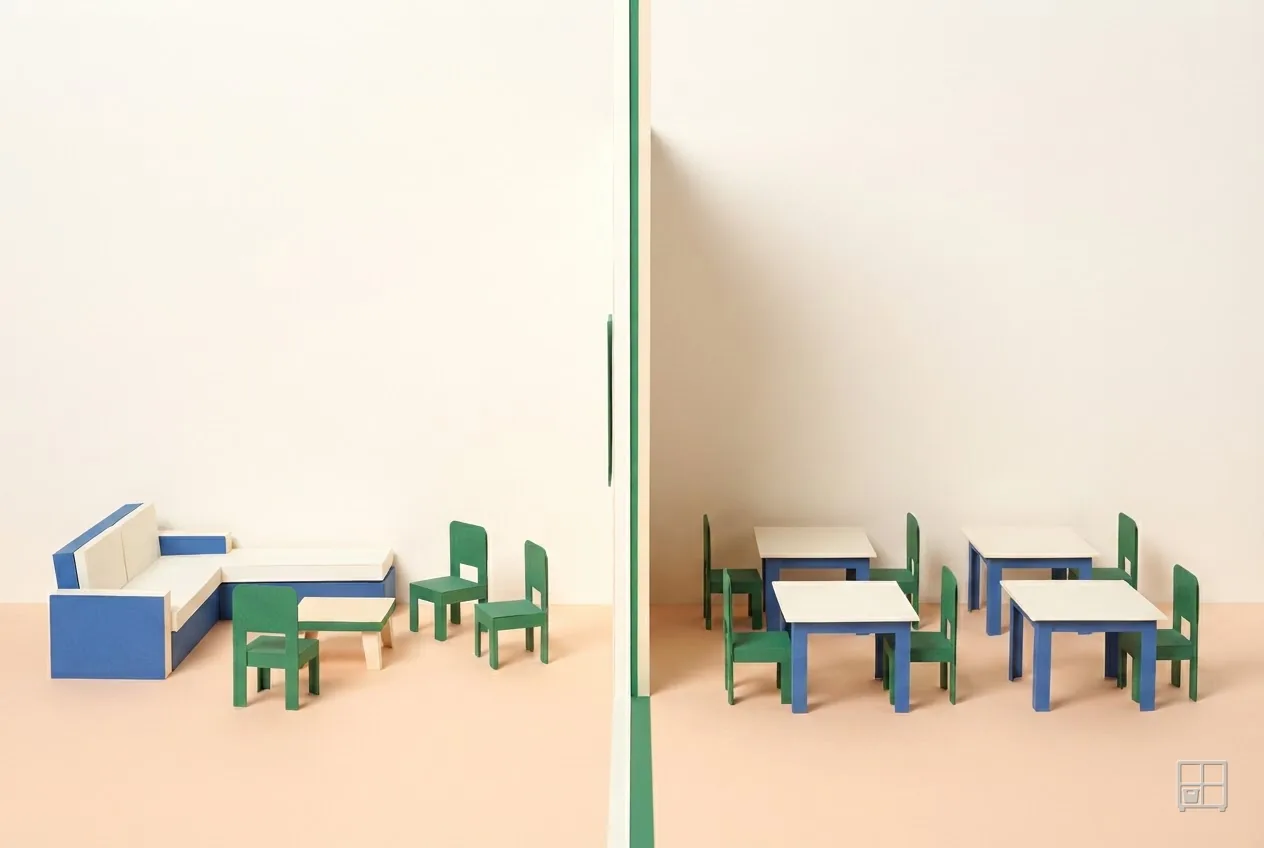
Group size, hours, ages, and the mix of children. A home has a small mixed-age group with the same adult all day; a preschool has a larger single-age group with a teacher and often an assistant.
Neither is better in the abstract. A shy two-year-old often does better in a home; a sociable four-year-old about to start school often does better in a preschool room.
| In-home daycare | Preschool | |
|---|---|---|
| Typical ages | 6 weeks to school age | 3 to 5 |
| Group | Small, mixed age | Larger, single age |
| Hours | Full working day | Often part-day sessions |
| Ratio | Youngest child sets it | Wider preschool band, set by each state |
| Same adult all day | Usually yes | Usually a team |
| Curriculum requirement | Rarely | Sometimes, by state |
| Closures | Provider illness closes it | Covered by other staff |
Structural comparison; every ratio and licensing detail is state-specific. Confirm against your own regulator.
A preschool session usually looks cheaper per week and often is not, because it does not cover a working day. A family that adds wraparound care or a nanny for the hours either side frequently pays more in total than a full-day place would have cost. For eligible families Head Start is the free version of the preschool column; see how Head Start compares with daycare.
Do the arithmetic on the whole week, not the session. Sessions, wraparound, holiday cover and the days the program closes for term breaks — a school-calendar preschool can close for a dozen weeks a year that a childcare home does not.
Then check what happens when your child is unwell or your provider is. A home program with no cover closes; a center or preschool does not.
By age first. Under three, in most markets, the question is which settings have any places at all — infant capacity is scarce and homes carry a large share of it. Still deciding when to start at all? The best age to start daycare guide walks the timeline from six weeks to three years.
By hours second. If you need a working day, a part-day preschool is a partial answer and has to be priced as one.
By fit third, and this is the part worth visiting for. Watch a drop-off if you can. The setting where the adults look calm at 8:30am is the setting that will be calm at 4:30 too.
Ask the same three questions everywhere
What is the ratio in the room my child would be in, what happens when a member of staff is ill, and how many days a year are you closed. The answers separate programs faster than any tour.