Home daycare license
Home programs are licensed as homes, not as small centers. That changes the tier you need, who gets background-checked, and which rooms an inspector walks through.
Three tiers, and the head count between them
Most states run at least two regulated tiers for home-based care plus an exempt category. The smaller tier — variously called registered, certified or family child care — carries lighter requirements and a lower cap. The larger tier, often called group family child care, carries center-like ratios, an assistant, and full inspection.
The line between them is a head count, and the count almost always includes the provider's own children under a stated age. A provider with two toddlers of their own starts partway through their own capacity, which is the single most common surprise in the whole process.
Exempt care is real but narrow: typically care for the children of one other family, or care by a relative. Three unrelated children on a regular basis is usually over the line.
Count before you accept the family
Crossing the threshold with an enrollment you have already accepted is the worst way to discover it. Check your state's number, subtract your own children, and enroll to the remainder.
The household is part of the application
Everyone who lives in the home over a stated age is background-checked, and in many states so is anyone regularly present — a partner who visits daily, an adult child home at weekends. Applicants find this the most intrusive part of the process and it is not negotiable.
Health statements may be required for household members. Pets need vaccination records, and any animal that cannot safely be around small children has to be genuinely separated during care hours.
Firearms, where present, are a specific regulated item in most states: locked, unloaded, ammunition stored separately, and usually declared on the application.
What the inspector walks through
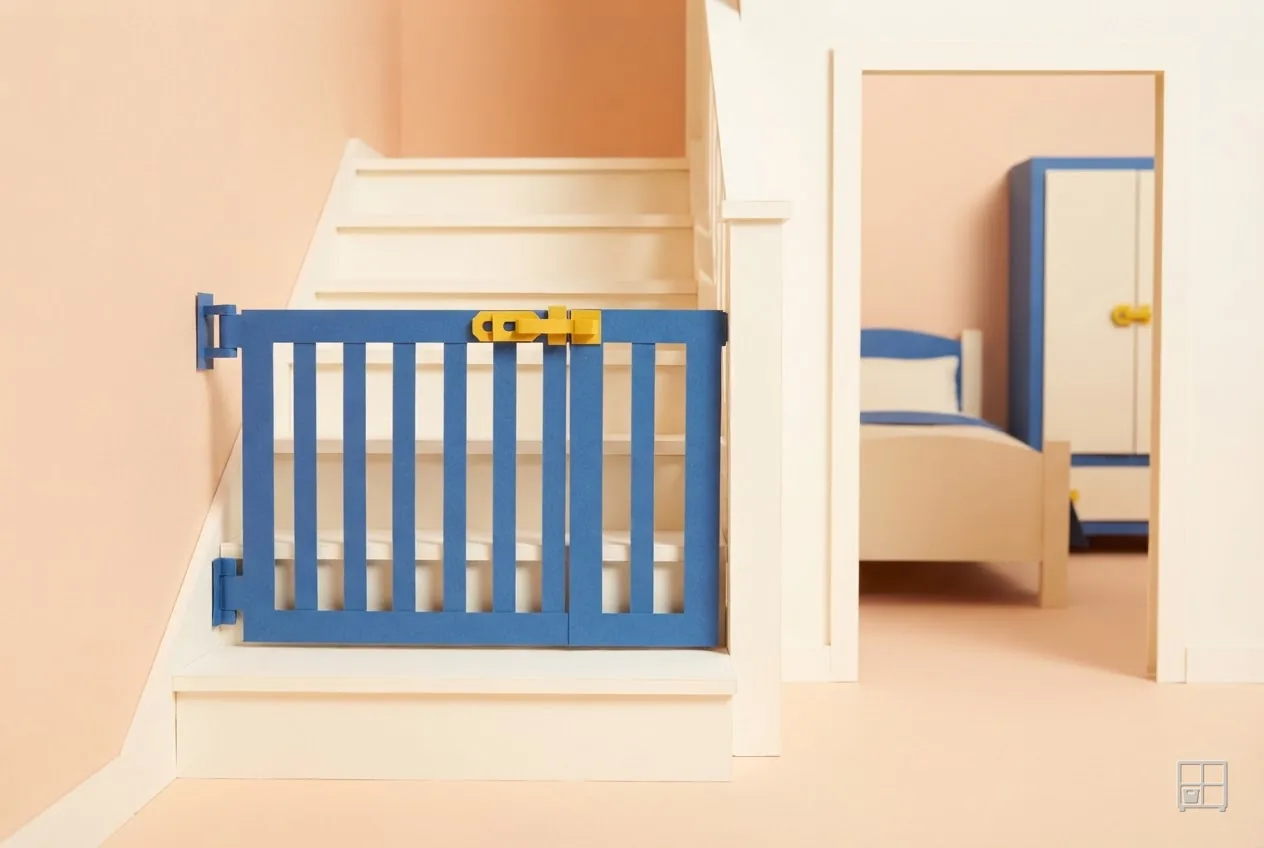
Every space children can reach, and the exits from it. Alarms on each level, tested. Two ways out. Stairs gated, outlets covered, blind cords cut short, medicines and cleaning products locked, water heater turned down below the scald threshold. The home daycare license checklist walks the same list room by room.
The sleeping space is inspected as a sleeping space. Cot and crib spacing rules apply in a home exactly as in a center, and a bedroom that fits four cots without aisles does not meet them.
Outdoors: a fence, a self-latching gate, and safe surfacing under anything children climb on.
- Alarms per level, tested, with the test logged.
- Two exits from the space children use.
- Everything hazardous locked — including at floor level.
- Cot spacing measured with the cots out, not on paper.
- Gate self-latching, fence intact.
The insurance gap most providers miss
A standard homeowner or renter policy generally excludes a business run from the home, and several exclude child care by name. That means the claim you cannot afford — an injury during care hours — may be the one your policy will not pay.
Ask your carrier in writing whether family child care is covered. If the answer is no, unclear, or "probably", buy a policy that says yes explicitly. Some states require proof of coverage as a licensing condition, and the states that do not still have the same liability. Insurance and an LLC answer different risks; the LLC vs sole proprietorship comparison explains what each one covers.
Budget for it as a real line. It is one of the few costs that is genuinely higher per child in a home program than in a center.
Is the license worth it
Licensing costs time and money and buys three things: legality above the exempt threshold, access to the subsidy and food programs that only pay licensed providers, and the credibility that fills a waiting list.
The food program alone can be decisive. A licensed home in the Child and Adult Care Food Program is reimbursed per meal — for July 2026 through June 2027 in the contiguous states, Tier I rates are $1.74 for breakfast, $3.31 for lunch or supper and $0.98 for a snack, with Tier II at $0.62, $1.99 and $0.27.
Across a full week with six children that is real money for paperwork you were partly doing anyway.
Sources
- Child Care Licensing — Childcare.govfetched 2026-09-04
- National Database of Child Care Licensing Regulations (HHS/ACF)fetched 2026-09-04
- USDA — CACFP Payment and Reimbursement Rates, July 2026 – June 2027fetched 2026-09-04