Why is daycare so expensive
Childcare is expensive for families and thin for providers at the same time, which sounds impossible until you look at the arithmetic. It comes down to three numbers, and two of them are set by law.
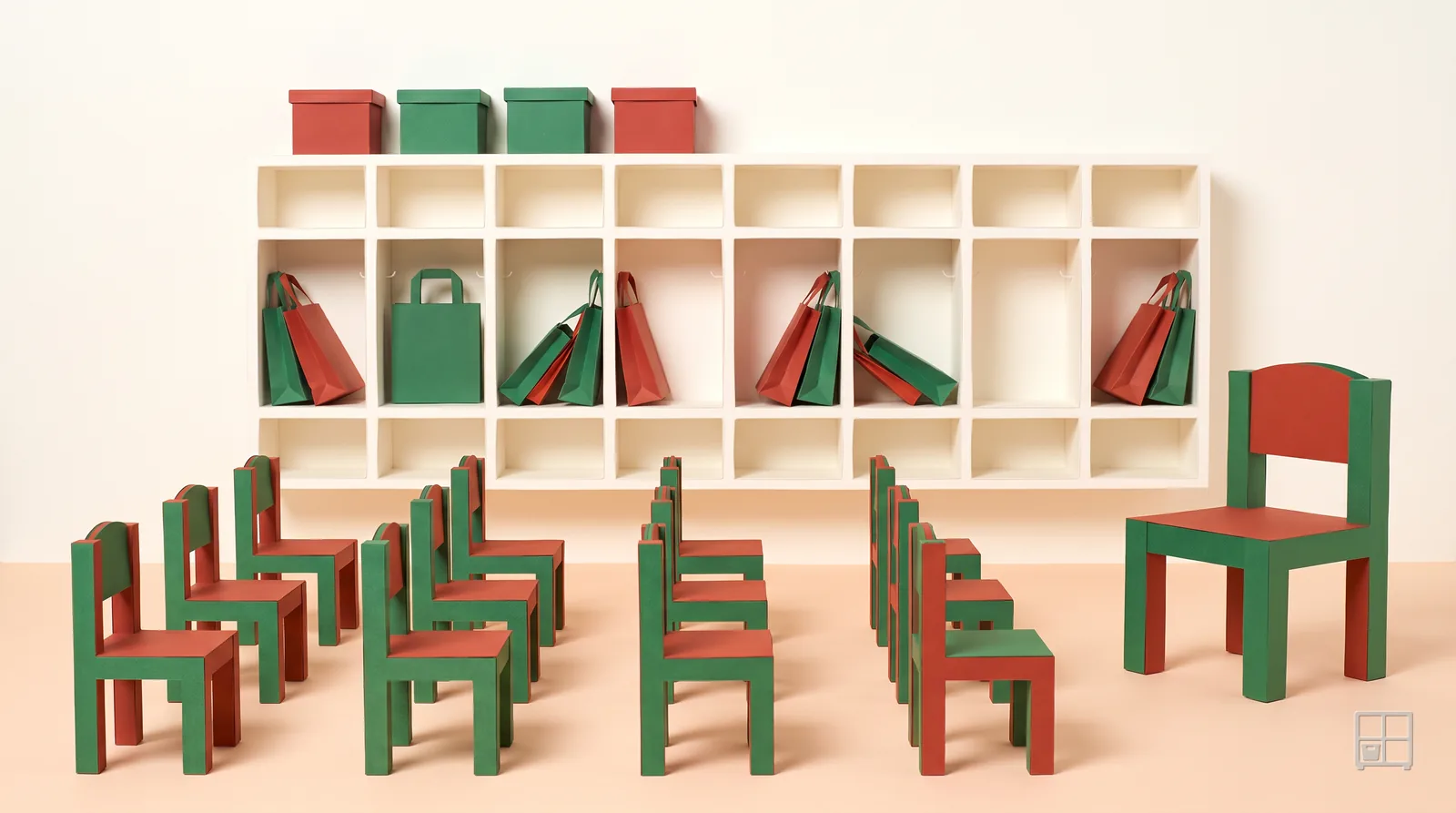
Ratio is a legal cap on productivity
In almost every other service business, you can serve more customers per employee as you grow. In childcare you legally cannot. Ratio fixes the number of fee-paying children one teacher may supervise, and the state sets it.
At 1:4 in an infant room, one teacher's wage is spread across four families. At 1:10 in preschool, across ten. Using the BLS May 2025 median of $16.82 an hour, a forty-hour teacher costs about $673 a week in wages alone — roughly $168 per infant, or $67 per preschooler, before any employer load, rent, food, insurance or administration.
There is no scale effect available. A program twice the size needs twice the teachers, in the same proportion, forever.
Wages are already low
The obvious lever would be pay, and it is already at the floor. Childcare workers had a median of $34,980 a year in the BLS May 2025 data — below the median for the workforce as a whole, in a job that requires background clearance, certification and continuous supervision of small children.
Preschool teachers, with a credential, sat at $38,140. Neither figure supports the idea that tuition is high because staff are well paid.
BLS also projects childcare-worker employment to decline about 2% through 2035. A shrinking, low-paid workforce is not one you can extract more from, which is why the sector's turnover problem and its price problem are the same problem.
| Room | Ratio | Wage cost per child per week |
|---|---|---|
| Infant | 1:4 | ≈ $168 |
| Toddler | 1:5 | ≈ $135 |
| Two-year-old | 1:7 | ≈ $96 |
| Preschool | 1:10 | ≈ $67 |
Wages only, at the BLS May 2025 median of $16.82/hr for a 40-hour week, before employer load and before every other cost. Ratios are illustrative mid-range bands, not any one state's rule.
The third line nobody sees
Occupancy. Every empty place is paid for by the families who are there, because the teacher stands in the room whether it holds thirteen children or sixteen.
Childcare occupancy is structurally imperfect: children age out mid-year, families move, infant rooms fill slowly because the families needing them are still expecting. A program planning on 100% and running at 85% has lost fifteen percent of revenue with no matching cost reduction available.
Which is why rates are set on realistic occupancy, and why a program that fills reliably can charge less than one that does not.
Why nobody is getting rich
Add it up: a cost structure dominated by legally-fixed labor, a workforce already paid below the national median, and revenue that cannot rise above what local families can pay. The margin left over is thin, which is why childcare businesses close at the rate they do.
That is the honest answer to the question. Care is expensive because it is labor, the labor is capped by law at a ratio, and the people doing it are not the ones capturing the money.
The policy responses — subsidy, employer benefits, public pre-K — all work on the same lever: someone other than the family paying part of a cost that is genuinely that high. Families can recover part of the bill through the dependent care FSA or the child and dependent care credit, both raised for 2026.
The food program is the one real offset
CACFP reimburses participating programs per meal — $2.54 for a free-rate breakfast and $4.76 for a free-rate lunch or supper in the contiguous states for July 2026 through June 2027. It is the one line where money comes in from outside the tuition sheet.
Sources
- BLS OOH — Childcare Workersfetched 2026-09-04
- BLS OOH — Preschool Teachersfetched 2026-09-04
- USDA — CACFP Payment and Reimbursement Rates, July 2026 – June 2027fetched 2026-09-04